


Introduction
You have saved the Pinterest boards. You have bookmarked the Instagram reels. You know exactly what your dream kitchen looks like: the waterfall island, the custom cabinetry, the integrated appliance suite that disappears behind flush panels. What you do not know is what all of it actually costs, and that uncertainty keeps you frozen between inspiration and action.
The luxury kitchen remodel cost in St. Louis varies dramatically based on decisions most homeowners never see coming. Scope creep that slow, silent budget killer does not start during construction. It starts during design, when one upgraded finish leads to another, and another, until the final number bears no resemblance to the original plan.
You deserve to walk into this project with your eyes wide open. Here is what drives the real cost of a high-end kitchen renovation budget, where the budget traps hide, and how the smartest homeowners eliminate scope creep before it begins to get their dream kitchen
Where Your Luxury Kitchen Budget Actually Goes
Every high-end kitchen renovation budget breaks into distinct categories. Understanding the relative weight of each one gives you the framework to make trade-off decisions with clarity instead of anxiety.
Custom Cabinetry: The Largest Single Investment
Custom cabinetry costs in St. Louis represents the single largest line item in any luxury kitchen project typically consuming roughly 30% of the total renovation budget. That percentage holds whether you build a modest chef’s kitchen or a full-scale culinary showpiece.
The spread between stock, semi-custom, and fully custom cabinetry is enormous. Stock cabinets come in fixed sizes with limited finish options. Semi-custom cabinets offer more configuration flexibility. Fully custom cabinetry built to your exact specifications, with bespoke door profiles, interior accessories, and finish matching occupies an entirely different tier of investment.
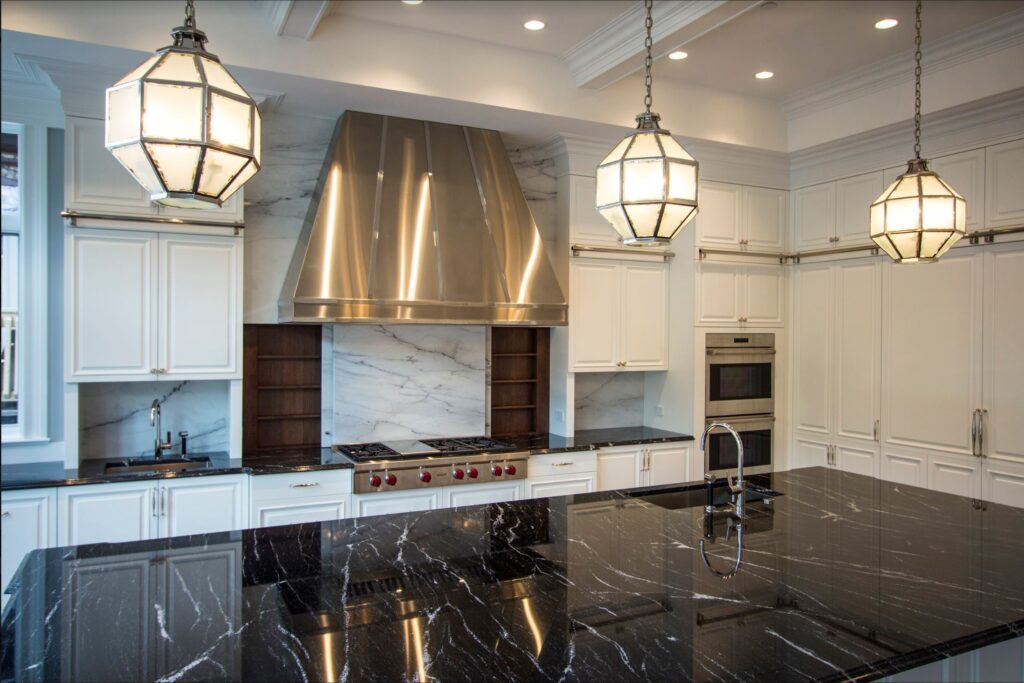
For a luxury kitchen in St. Louis, fully custom cabinetry from premium manufacturers defines the standard. These cabinets feature dovetail joinery, soft-close hardware, custom interior organizers, and finishes that match your design vision precisely. The quality gap between semi-custom and fully custom shows in every detail and it shows in the budget.
Appliance Packages: The Specification That Shapes Everything
The cost of appliance packages drives more downstream decisions than most homeowners realize. A professional-grade range requires specific ventilation capacity. An integrated refrigerator column demands cabinetry built to exact dimensional specifications. A steam oven needs dedicated plumbing and electrical circuits that standard kitchens do not include.
In 2026, the kitchen design trends driving appliance selection lean heavily toward integration and smart technology. The NKBA’s 2026 Kitchen Trends Report found that 91% of industry professionals agree that multifunction appliances rank among the most popular features homeowners request (NKBA, 2025). Steam ovens with air frying capability, induction cooktops with integrated ventilation, and refrigeration columns with customizable temperature zones all reflect this trend.
For a luxury kitchen in St. Louis, the appliance package typically represents the second-largest budget category after cabinetry. More importantly, your appliance selections dictate electrical requirements, plumbing routing, ventilation design, and cabinetry dimensions making them one of the earliest decisions you need to finalize.
Countertops, Backsplash, and Surface Materials
Natural stone, engineered quartz, porcelain slab, and specialty materials like quartzite and dekton each carry different price points, fabrication requirements, and maintenance profiles. The material you choose for countertops often influences your backsplash selection, which influences your overall color palette, which cascades into cabinetry finish decisions.
This is where scope creep loves to hide. You select a stunning quartzite slab for the island. It looks incredible but the veining pattern requires careful bookmatching by a specialized fabricator. The backsplash needs to complement the stone’s movement without competing with it, so you upgrade from standard tile to a full-height porcelain slab. Each decision improves the result. Each decision also increases the investment.
Labor, Mechanical, and Structural Work
The skilled trades plumbing, electrical, HVAC, framing, and finish carpentry represent roughly 17% of a typical kitchen renovation budget. But in a luxury kitchen, this percentage often climbs higher because the scope of mechanical work expands significantly.
Moving a gas line for a relocated range, adding dedicated 50-amp circuits for an induction cooktop, rerouting plumbing for a pot filler and prep sink, upgrading ventilation ductwork for a high-CFM range hood these modifications require licensed tradespeople and often trigger permit requirements. They also fall outside the “visible” finishes that homeowners focus on during design, which makes them a frequent source of budget surprise.
The Categories Most Homeowners Forget
Lighting design, hardware, plumbing fixtures, flooring, and decorative elements round out the budget and collectively they add up faster than any single category suggests. A luxury kitchen demands layered lighting: task lights under cabinetry, ambient lighting on dimmers, accent lighting inside glass-front cabinets, and statement pendants over the island. Each fixture requires wiring. Each wiring run requires an electrician.
Hardware selections cabinet pulls, knobs, and appliance handles seem minor until you multiply a per-piece premium across 40 or 50 cabinets and drawers. Plumbing fixtures follow the same pattern: a high-end faucet, pot filler, soap dispenser, and disposal switch each carry individual costs that compound quickly.
Kitchen Design Trends 2026: What Drives Luxury Costs Higher
The NKBA 2026 Kitchen Trends Report identifies several trends that directly affect the high-end kitchen renovation budget this year (NKBA, 2025).
Expanding kitchen footprints. A full 76% of industry professionals surveyed expect kitchen footprints to grow over the next three years. For St. Louis homeowners, this often means absorbing adjacent dining rooms or living spaces which adds structural modification, flooring transitions, and lighting redesign to the project scope.
Personalization over standardization. The report names “achieving luxury through personalization” as a growing trend on its adoption curve. Custom storage solutions, bespoke island configurations, and individualized finish palettes all increase design time and fabrication cost compared to catalog selections.
Smart technology integration. Connected appliances, automated lighting controls, and built-in charging stations require infrastructure planning that goes beyond standard kitchen electrical. Running low-voltage wiring, installing smart panels, and programming automation systems all add labor and material costs.
Wellness-focused design. Water filtration systems, air quality considerations, and steam cooking appliances reflect the wellness trend NKBA identifies as growing. Each element improves the kitchen experience and adds a line item to the budget.
The Houzz 2025 U.S. Kitchen Trends Study reinforces this trajectory: the top 10% of kitchen remodelers invest triple the national median on major high-end kitchen renovations, and that premium spending tier grew 20% in a single year (Houzz, 2025). The gap between a “nice kitchen” and a “luxury kitchen” is widening and understanding what drives that gap protects you from crossing it accidentally.
The Scope Creep Traps That Blow Luxury Kitchen Budgets
Scope creep does not announce itself. It arrives one beautiful decision at a time. Recognize these patterns and you protect your budget.
Trap #1: Designing without a fixed material palette. When you browse finishes during construction instead of locking them during design, every showroom visit introduces a more expensive option. Finalize your material palette before breaking ground, not after.
Trap #2: Treating the appliance package as a late decision. Your appliances dictate your cabinetry dimensions, your electrical plan, your ventilation design, and your plumbing layout. Selecting appliances after cabinetry design begins almost guarantees change orders.
Trap #3: Ignoring the “invisible” infrastructure. Electrical upgrades, plumbing relocations, structural modifications, and HVAC adjustments do not show in your finished kitchen but they show in your invoice. Budget for infrastructure from the start, not as an afterthought.
Trap #4: Comparing your project to national averages. A luxury kitchen remodel cost in St. Louis reflects St. Louis labor rates, material availability, permit requirements, and design complexity. National median figures give you a starting point, not a budget.
Trap #5: Skipping design visualization. You approve a floor plan on paper, construction begins, and three weeks in you realize the island blocks the sight line to the family room. Changing direction during construction multiplies costs. Seeing your kitchen in realistic 3D visualization before committing eliminates this risk entirely.
How to Budget a High-End Kitchen Renovation Without Losing Control
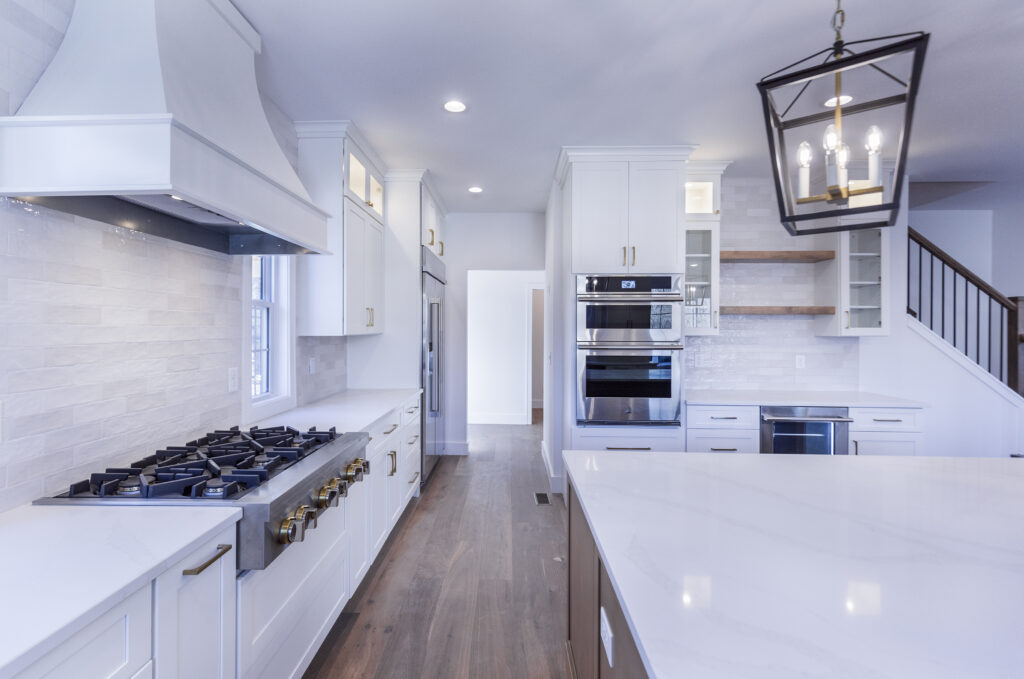
Follow this process, and you stay ahead of scope creep instead of reacting to it.
Step 1: Define your non-negotiables. List the features you refuse to compromise on whether that means a 48-inch range, a custom pantry wall, or a specific countertop material. These anchor your budget priorities.
Step 2: Select your appliance package early. Lock your appliance specifications before cabinetry design begins. This ensures every downstream decision electrical, plumbing, ventilation, and cabinet dimensions aligns from the start.
Step 3: Establish a complete material palette during design. Choose your cabinetry finish, countertop material, backsplash, flooring, hardware, and plumbing fixtures before construction begins. Every selection you make during design is a decision you do not make under pressure during construction.
Step 4: Visualize before you commit. A realistic 3D rendering of your kitchen showing materials, lighting, proportions, and sight lines reveals design issues that floor plans cannot. This single step eliminates the most expensive source of scope creep: changing your mind after construction starts.
Step 5: Work with a design-build team that prices as it designs. When your designer and builder operate under the same roof, every design decision carries a real-time cost implication. You never reach the end of design wondering if you can afford what you just created.
Key Takeaways:
- Custom cabinetry costs in St. Louis typically represent roughly 30% of a luxury kitchen budget, making it the single largest line item and the most important specification to get right.
- The cost of appliance packages drives downstream costs in electrical, plumbing, ventilation, and cabinetry finalization before design begins.
- The top 10% of kitchen remodelers invest triple the national median on high-end kitchen projects, and that premium tier grew 20% in one year (Houzz, 2025).
- Scope creep starts during design, not during construction, locking your material palette, appliance package, and layout before breaking ground.
- 3D design visualization eliminates the most expensive form of scope creep: changing your mind after construction starts.
Frequently Asked Questions
What percentage of my budget should cabinetry represent in a luxury kitchen?
Custom cabinetry typically accounts for roughly 30% of a high-end kitchen renovation budget. That share can climb higher if you specify premium manufacturers with bespoke door profiles, specialty finishes, and custom interior organizers. Locking your cabinetry specifications early helps you allocate the remaining budget across appliances, surfaces, and labor with confidence.
What kitchen design trends in 2026 affect the budget the most?
The NKBA 2026 Kitchen Trends Report identifies expanding kitchen footprints, smart technology integration, personalized luxury finishes, and wellness-focused features as the kitchen design trends 2026 with the strongest cost impact. Each one adds design complexity, material cost, and labor hours especially when combined in a single project.
How do I prevent scope creep during a luxury kitchen remodel?
Finalize your appliance package, material palette, and layout during the design phase before construction begins. Use 3D design visualization to test every decision in a realistic rendering of your space. Work with a design-build team that provides real-time cost feedback as the design develops, so you never create plans that exceed your budget.
Why do appliance selections matter so much for the overall budget?
Professional-grade appliances dictate electrical capacity, plumbing routing, ventilation requirements, and cabinetry dimensions. Changing appliance specifications after design begins triggers change orders across multiple trades. Selecting your appliance package first prevents this cascade of revisions and protects your timeline.
What is design visualization, and how does it save money?
Design visualization creates a photorealistic 3D rendering of your kitchen showing your exact materials, finishes, appliances, and spatial proportions. It allows you to make design decisions and catch potential issues before construction starts. Changes on screen cost nothing. Changes on a job site cost significantly more.
Visualize Your Dream Kitchen Before You Commit a Dime
You know where the budget goes and where scope creep hides. Now see your kitchen before you build it.
FM Design Build offers Design Visualization that renders your kitchen in photorealistic 3D showing your exact cabinetry, countertops, appliances, lighting, and finishes in your actual space. Test material combinations, evaluate sight lines, and make every critical decision before a single cabinet gets ordered.
Try before you buy. Contact FM Design Build to visualize your luxury kitchen in full detail before committing to construction.
About the Author
FM Design Build is a St. Louis design-build firm that unites architectural creativity and construction precision under one roof. The team specializes in custom homes, large scale renovations, and high-end kitchen transformations guiding homeowners from initial concept through photorealistic design visualization and into finished construction. Every project reflects a commitment to budget transparency, design excellence, and a process that puts homeowners in full control of their investment.